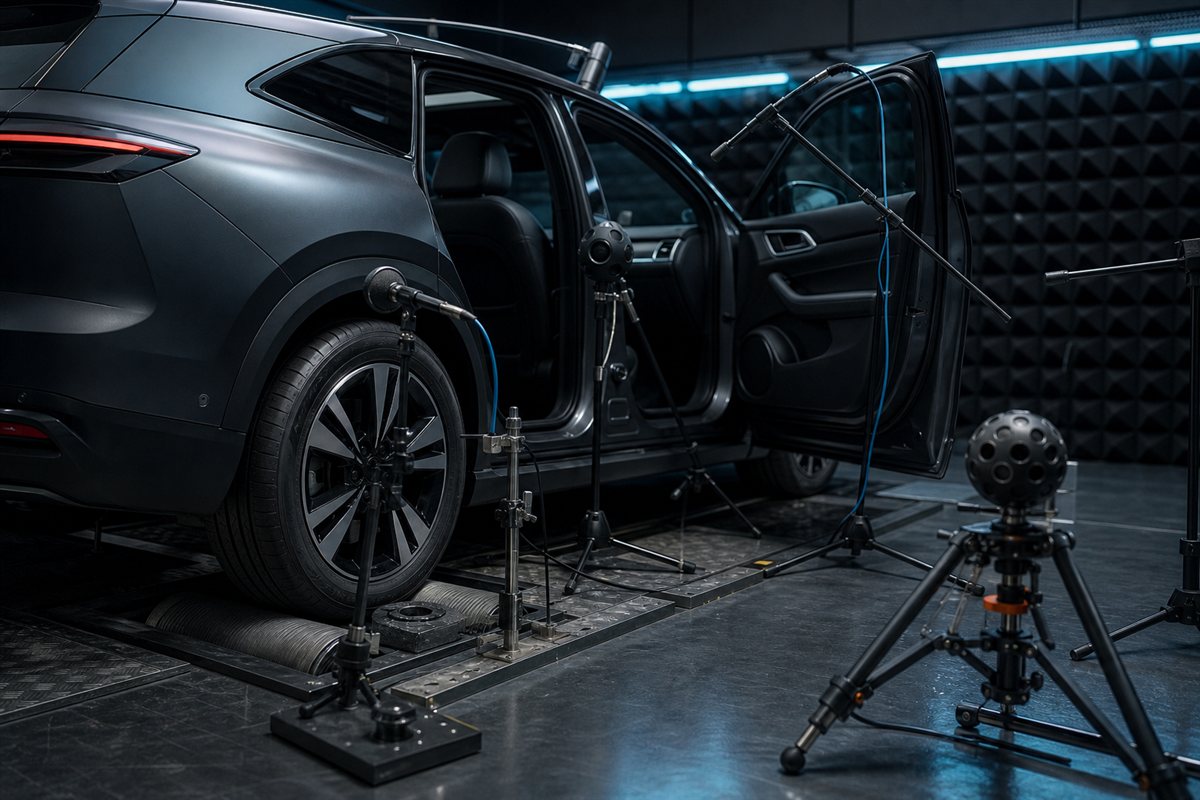
Road noise is the single most common complaint Model Y owners raise — on Tesla Motors Club, on Reddit, and in person. It makes sense: with no engine to mask anything, every bit of tire roar and wind hiss reaches your ears, and the Model Y’s big wheels, stiff suspension, and tall glass cabin amplify it. The good news is this is one of the most fixable annoyances in Tesla ownership. Below are the four fixes that owners consistently report working, ranked by cost and payoff, plus what to skip.
Why the Model Y Is Noisier Than You Expected
Three things stack up against you. First, an EV has no engine drone to mask road noise, so the same decibels feel louder. Second, most Model Ys ship on large-diameter wheels with short, stiff sidewalls — great for looks, bad for acoustics. Third, earlier builds skimped on rear acoustic glass and door sealing, which is why wind and tire noise sneak in around the doors and rear hatch. The refreshed 2026 “Juniper” Model Y added acoustic glass all around and better sealing, and owners widely report it’s noticeably quieter — but if you drive a 2020–2025 car, you’re the one this guide is for.
Fix #1: A Door Seal Kit — the Best $25 You’ll Spend
The Model Y’s doors leave small unsealed channels around the frames and B-pillars. A secondary rubber seal kit closes those gaps, and it’s the classic first mod: cheap, 30–60 minutes with no tools beyond your hands, and fully reversible. Owner consensus from forum threads is honest, though: the reduction is real but moderate — think “takes the edge off wind hiss at 70 mph,” not “library.” A welcome side effect everyone agrees on: the door sills stay dramatically cleaner in rain and dust.
Buy a kit cut specifically for the Model Y rather than generic weather stripping — generic rolls end up too thick in some spots (doors need a slam to close) and too thin in others. A Model Y–specific door seal kit runs about $20–$35 and usually includes the trunk/hatch seals too. If your old seals are staying put, also check our Juniper compatibility guide before reusing accessories on a 2026 car.
Fix #2: Quieter Tires — the Biggest Single Difference
Nothing changes cabin noise like the rubber itself. Tires are where most of the noise comes from, and the gap between a loud worn tire and a quiet EV-rated touring tire is bigger than every other fix on this page combined. If your factory set is past half tread, this is where your money should go.
The picks owners recommend again and again: the Michelin CrossClimate2 for quiet all-weather duty, and the EV-specific Hankook iON evo AS, built with foam liners and low-rolling-resistance compounds that preserve range. Look for tires with internal acoustic foam (Tesla’s OE tires have it — many cheap replacements don’t) and an XL load rating. We break down sizes by trim and year, plus quietest/winter/budget picks, in our full Model 3 & Model Y tire guide.
Two free wins while you’re at it: keep pressures at the door-sticker value (over-inflating past ~45 psi adds noticeable harshness and roar), and stay on your 6,250-mile rotation schedule — cupped, unevenly worn tires are the #1 source of that low droning hum owners chase for months.
Fix #3: Sound-Deadening Mats in the Wheel Wells and Trunk
This is the weekend-project tier. Butyl damping mats — Noico 80 mil and Kilmat 80 mil are the two everyone uses — add mass to thin metal panels so they stop acting like speaker cones. The highest-value real estate in a Model Y, per owners who’ve done it and measured before/after: the rear wheel wells (behind the trunk side liners), the trunk floor wells, and under the rear seat. Shops that specialize in this report a few decibels of broadband reduction from wheel-well treatment alone, which is a lot — decibels are logarithmic.
Check Noico 80 mil on Amazon36 sq ft butyl damping mat — wheel wells, trunk floor, rear seat Check Kilmat 80 mil on Amazon36 sq ft butyl damping mat — the other owner-standard packBudget $60–$120 in materials and an afternoon per area. Pulling the trunk liners is clip work, not surgery, but go slow on the plastic fasteners. Pair the butyl layer with closed-cell foam on top if you want to also kill higher-frequency airborne noise. This fix targets the deep tire rumble specifically — if your complaint is wind hiss, do Fix #1 first.
Fix #4: Wheel Size — the Fix Nobody Wants to Hear
Short version: 19-inch wheels with taller sidewalls are quieter (and ride better, and add range) than 20s or 21s. If you’re on Inductions or Überturbines and the noise truly bothers you, a set of 19s with quiet touring rubber transforms the car more than any amount of mat-laying. It’s the most expensive route, so it lands last here — but if you’re due for both wheels and tires anyway, it’s the ceiling on what’s achievable.
The Four Fixes Compared
| Fix | Cost | Effort | Targets | Expected Impact |
|---|---|---|---|---|
| Door seal kit | $20–$35 | 30–60 min, no tools | Wind hiss, dust | Modest but real; best $/effort |
| Quieter tires | $700–$1,200/set | Tire shop visit | Tire roar (the main source) | Largest single improvement |
| Sound-deadening mats | $60–$120/area | Weekend DIY | Low rumble, resonance | Strong in treated areas |
| Downsize to 19″ wheels | $1,000–$2,000+ | Wheel + tire swap | Everything + ride + range | Biggest total change, biggest bill |
What Order Should You Do Them In?
Start with the door seal kit — it’s cheap enough to be a no-regret move and you’ll know within one highway drive what it bought you. If the remaining noise is a deep rumble, your tires are the culprit: check tread wear and pressure first, then plan the upgrade using our tire guide. Save the deadening mats for after the tire decision — quiet tires may get you to “done” without a weekend on your knees in the trunk. And if you’re shopping accessories anyway, our Model Y accessories roundup flags which comfort upgrades actually earn their keep.
One honest caveat throughout: noise perception is wildly personal. The same seal kit gets “night and day” from one owner and “zero difference” from the next. That’s why the order above starts cheap.
Frequently Asked Questions
What is the single best fix for Model Y road noise?
Tires. Most cabin noise is tire roar, and swapping worn or hard rubber for a quiet EV-rated touring tire (with internal acoustic foam) makes a bigger difference than any add-on product.
Do Model Y door seal kits actually work?
Yes, modestly. Owners consistently report reduced wind hiss at highway speed and much cleaner door sills — but it won’t silence tire rumble. At ~$25 it’s still the best first step.
Is the 2026 Juniper Model Y quieter?
Yes. The refresh added acoustic glass all around, improved door sealing, and retuned suspension, and owners widely report a clearly quieter cabin than 2020–2025 builds.
How much sound deadening mat do I need?
One 36 sq ft box of 80-mil butyl mat typically covers the rear wheel wells plus trunk wells with some left over. You do not need to carpet the whole car — treat the thin panels nearest the noise.
Does tire pressure affect road noise?
Noticeably. Running well above the door-sticker pressure stiffens the contact patch and adds roar and harshness. Stick to the recommended ~42 psi unless you have a specific reason not to.
Will smaller wheels really make my Model Y quieter?
Yes — taller sidewalls absorb impacts and isolate road texture better, which is why 19″ setups are quieter than 20″ or 21″ on the same car. You also gain ride comfort and range.
Related: Best Tires for Model 3 & Model Y · Model Y Accessories Roundup · Will Your Accessories Fit the 2026 Juniper? · New Owner First-Week Checklist